
Planning & approvals · 9 min read
Party Wall Agreements: What you need to know in 2026
Last Updated:
When the Party Wall Act applies, which neighbours need to be notified, what happens if they object, and how it can affect your timeline and cost.

KEY DEFINITIONS
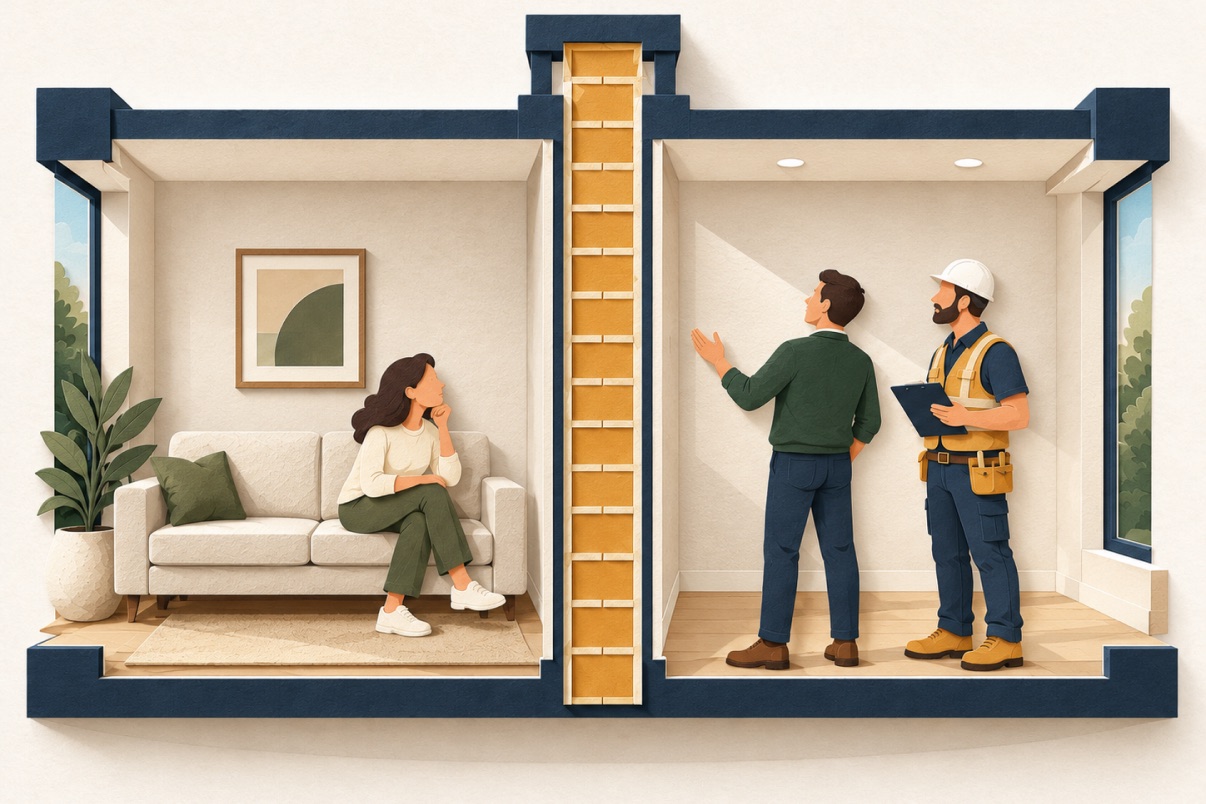
It’s the process used when building work could affect a shared wall, a boundary, or a neighbouring property nearby.
In a simple case, you formally notify your neighbour and they agree in writing.
If they don’t agree, the process becomes more formal and a surveyor will usually need to be appointed to decide how the work can go ahead, which is formally written in a Party Wall Award document.
The legal rules come from the Party Wall etc. Act 1996 and apply in England and Wales.
A party wall award is the written document produced by the appointed surveyor when your neighbours don’t give their consent to the work outlined in your construction plans.
It sets out what work can happen, how it should be carried out, and any protections or conditions that need to be followed.
It can cover things like working methods, access, protection of the neighbouring property, timing and who is responsible for certain costs.
Think of it as the agreed rulebook for the parts of the build affected by the party wall process.
Why you should care
Why are party wall agreements so important?
If you’re extending your home or converting your loft, there are three things we look out for:
- structural work involving a wall or floor shared with another property
- building on or at the boundary
- digging foundations close to a neighbouring building
Those are the situations most likely to bring the party wall rules into your project.
That doesn’t automatically mean you end up with surveyors, a dispute and a big extra bill.
Sometimes the notice is served, your neighbour gives written consent and that is the end of it.
We had exactly that on our Lewisham side-return extension, where the neighbours consented without any disputes.
But some projects take more work to get through the process.
On our Clapton side-return extension, our client owned the lower flat and the owners of the two flats above were apprehensive about the structural work. Further negotiations were needed before construction could begin, including solicitor involvement, which pushed the anticipated start date back by three and a half weeks!
Timing mattered. Our client was pregnant and wanted the renovation underway before the new baby arrived.
That’s why this is so important, if you want the project completed within a certain timeframe, the party wall process can end up being the biggest risk to that timeline.
With that being said, the party wall process is very manageable. The risk comes from leaving it too late.
Does it apply to you
Do I need a party wall agreement?
Not every project needs an agreement
There are three main reasons you might need a party wall agreement, each with its own minimum notice period rules:
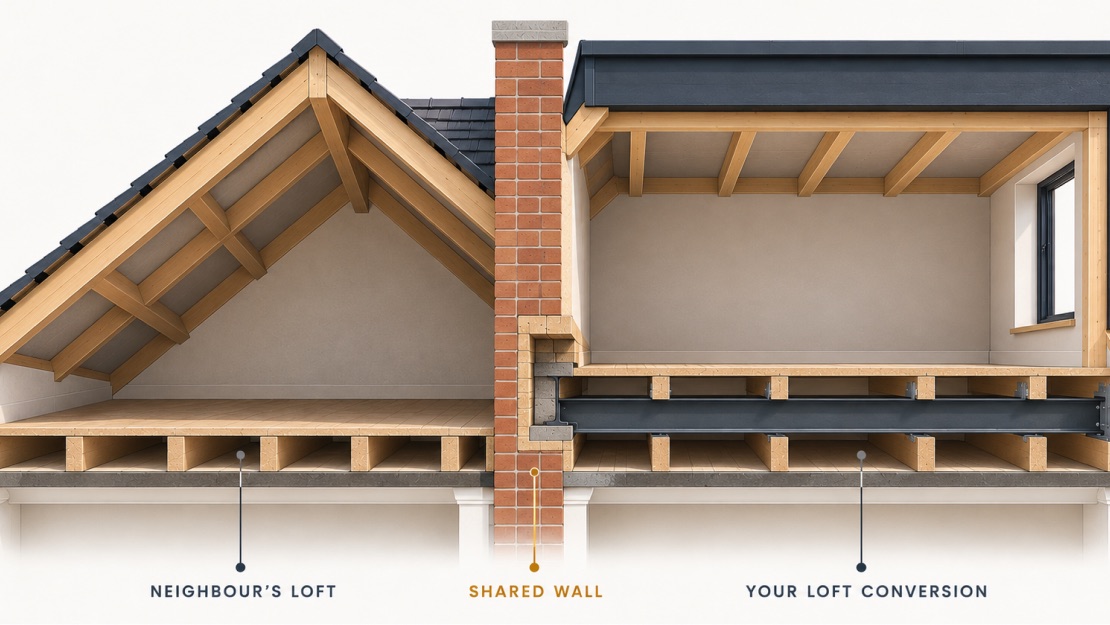
1. Work to a shared wall or structure
Minimum notice - 2 months before work starts
For example, a loft conversion may need a new structural beam supported by the wall between your home and your neighbour’s.
Other structural changes can also require notice, such as removing a chimney breast from the shared wall.
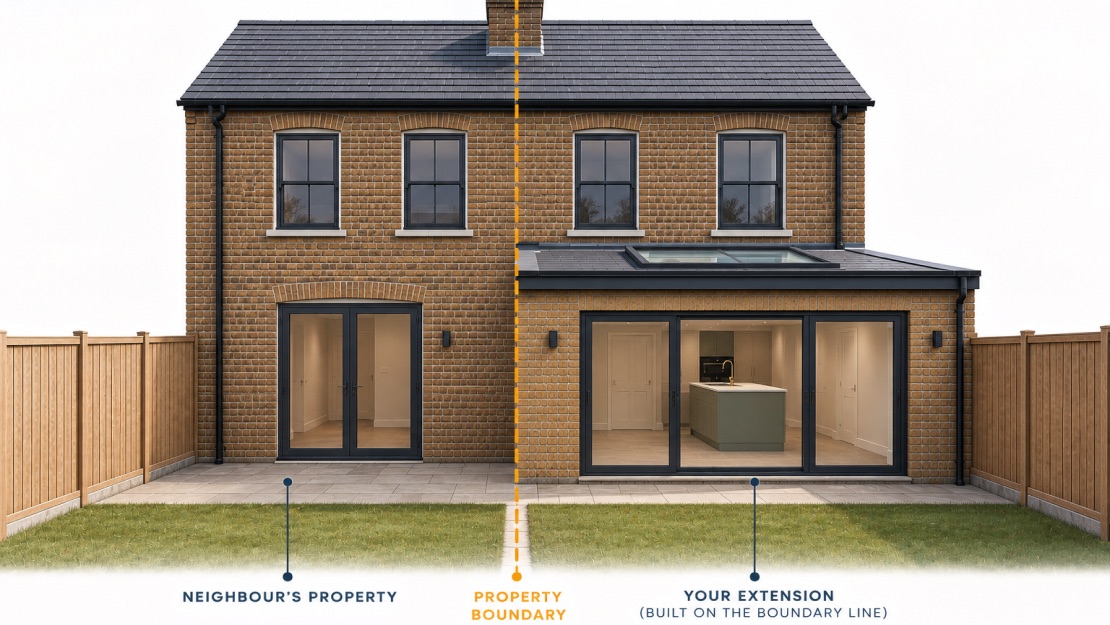
2. Building at the boundary
Minimum notice - 1 month before work starts
For example, if your new extension wall is being built directly on the line between your property and your neighbour’s property.
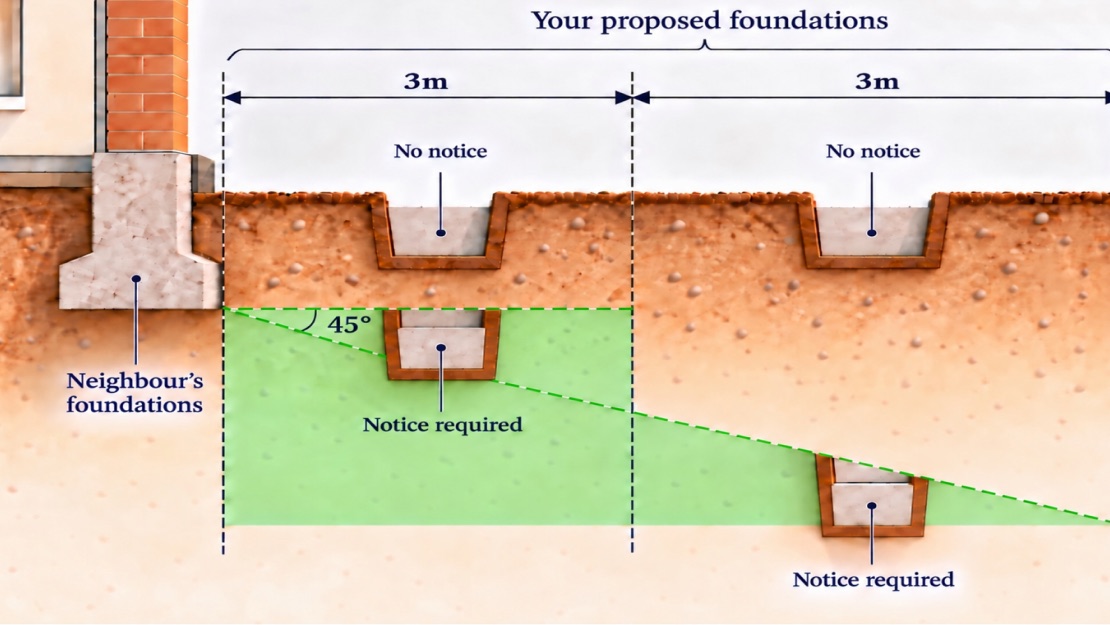
3. Digging close to a neighbouring building
Minimum notice - 1 month before work starts
Even if the extension itself stays entirely on your land, digging new foundations close to your neighbour can mean you need to formally notify them before work starts.
Being close to your neighbour’s property on its own does not automatically mean you need notice. How deep you are digging compared with their foundations is what matters.
what happens next
If this applies to me, what do I do?
Knowing the Party Wall rules apply doesn’t mean you immediately need to appoint surveyors. The first step is to speak to your neighbour, then make sure the correct owner or owners receive the appropriate written notices.
1. Speak to your neighbour first
Tell them what you’re planning before a formal notice arrives. A normal conversation, call or WhatsApp is useful here because it gives them context and a chance to ask questions.
We’re here to make the process smoother for you and them: if a neighbour has questions about how the work will be carried out, we’re happy to explain the construction side of it, including the structural work, the timeline of events and how their property will be protected.
But that conversation doesn’t replace the Party Wall notice itself.
2. Make sure you’re notifying the right owner
For a straightforward house, this may simply be the owner next door.
Flats and leasehold properties can be more complicated because the person living next door, the leaseholder and the freeholder are not necessarily the same person. Depending on what part of the building your work affects, there can also be more than one adjoining owner.
3. Serve the Party Wall notice
What is the notice?
A Party Wall notice is a formal written notice telling the relevant owner what work you intend to carry out and when you expect it to start.
For most notices, it needs to include things like:
- Your name and address
- The property where the work will take place
- What you intend to do
- When you expect the work to start
For excavation work, plans and sections showing the position and depth of the proposed foundations must also accompany the notice.
How do I serve the notice?
When serving the notice, you don’t submit it to the council or GOV.UK. You serve it directly to the relevant owner or owners.
A notice can be delivered personally or sent by post. It can also be sent by email, but only if your neighbour has agreed to receive Party Wall documents electronically and given you their email address.
Save time with the right notice templates
GOV.UK publishes example notices for shared-wall work, boundary work and excavation. We’ve bundled them together here so you don’t have to search for them yourself.

what happens after the notice
What happens after I serve the notice?
They have 14 days to respond in writing.
What happens next depends on how they respond, they can either:
- Agree with the proposed work
- Disagree with the proposed work
- Not respond within 14 days
They may also send a counter-notice asking for additional or modified work.
1. What happens if my neighbour agrees?
If your neighbour agrees in writing and doesn’t send a counter-notice, that’s it. You don’t need to appoint surveyors or get a formal Party Wall Award.
We do however recommend taking clear photos of the neighbouring property before any work starts. That way everyone has a clear record of its condition before construction begins in case of any future disputes.
Also, if you want to start work before the notice period has ended (the 1–2 months noted earlier), your neighbour will need to agree to the earlier start date in writing.
2. What happens if my neighbour doesn’t agree?
If your neighbour doesn’t agree, it doesn’t mean the project can’t happen.
Instead, the process becomes more formal before the affected work can begin.
At this point, there are two routes:
- You both agree to use one Party Wall surveyor. This is called an Agreed Surveyor.
- You each appoint your own surveyor. The two surveyors then work together to agree what needs to happen.
The surveyor or surveyors will review the proposed plans, any protections needed for the neighbouring property, and set out the final requirements in a .
This is also where projects can experience delays, as surveyors have their own schedules, and they may need structural drawings and calculations before they can complete the Award.
3. What happens if my neighbour doesn’t respond within 14 days?
Don’t assume silence means they agree.
What happens next depends on which type of work you notified them about:
- Shared wall or structure: No response is treated as a dispute and you move into the surveyor process.
- Excavation near their foundations: the same as above, this is treated as a dispute.
- A new wall across the boundary: without their written agreement, you cannot build the wall across the boundary. It has to stay completely on your land.
- A new wall on your own land up to the boundary: their agreement is not required for the wall itself. Once the one-month notice period has passed, the work can proceed.
4. What happens if my neighbour sends a counter-notice?
A counter-notice is slightly different from simply agreeing or disagreeing with your work.
Your neighbour can be happy for the main work to go ahead, but still ask for additional or modified work to be carried out at the same time.
Counter-notices only apply when you’ve served a Party Structure Notice.
For example, they might ask for an additional detail to be included while the shared wall or structure is already being worked on.
The timings are also slightly different here:
- They should tell you within 14 days if they intend to send a counter-notice.
- The actual counter-notice must be served within one month of your original notice.
- Once you receive it, you have 14 days to respond.
If you agree, the requested work can be included.
If you don’t agree, that disagreement goes through the same surveyor process described above.
KEY TAKEAWAY
The one thing to take away from this article
Give the Party Wall process enough time
If Party Wall applies to your project, start the conversation and process as early as you can.
Even the friendliest neighbour can decide they want the protection of a surveyor and a formal Party Wall Award. Once surveyors, structural drawings and other people’s schedules are involved, the process can take weeks or even months.
Starting early gives you enough time for the more complicated route without putting your planned build date at risk.
FAQs

 Call now
 WhatsApp
 Call Eddie
 WhatsApp Eddie


 Save to contacts
 Apple Calendar
 Google Calendar
 Outlook